
Delivery
Steering.
From strategy on paper to strategy in action
Why a governance model?
Designing strategy is often energising. But as soon as execution starts, the issues of the day take over: operational urgencies dominate, 'today' wins over 'tomorrow', and strategy loses its steering power. What is often missing is a way of steering that systematically connects daily work and strategic ambition.
Our approach.
Organisations always steer along two lines: realising daily performance (run) and driving renewal (change). Because both lines need their own pace and rhythm, we align them in a governance model that fits the strategy, culture and ambitions.
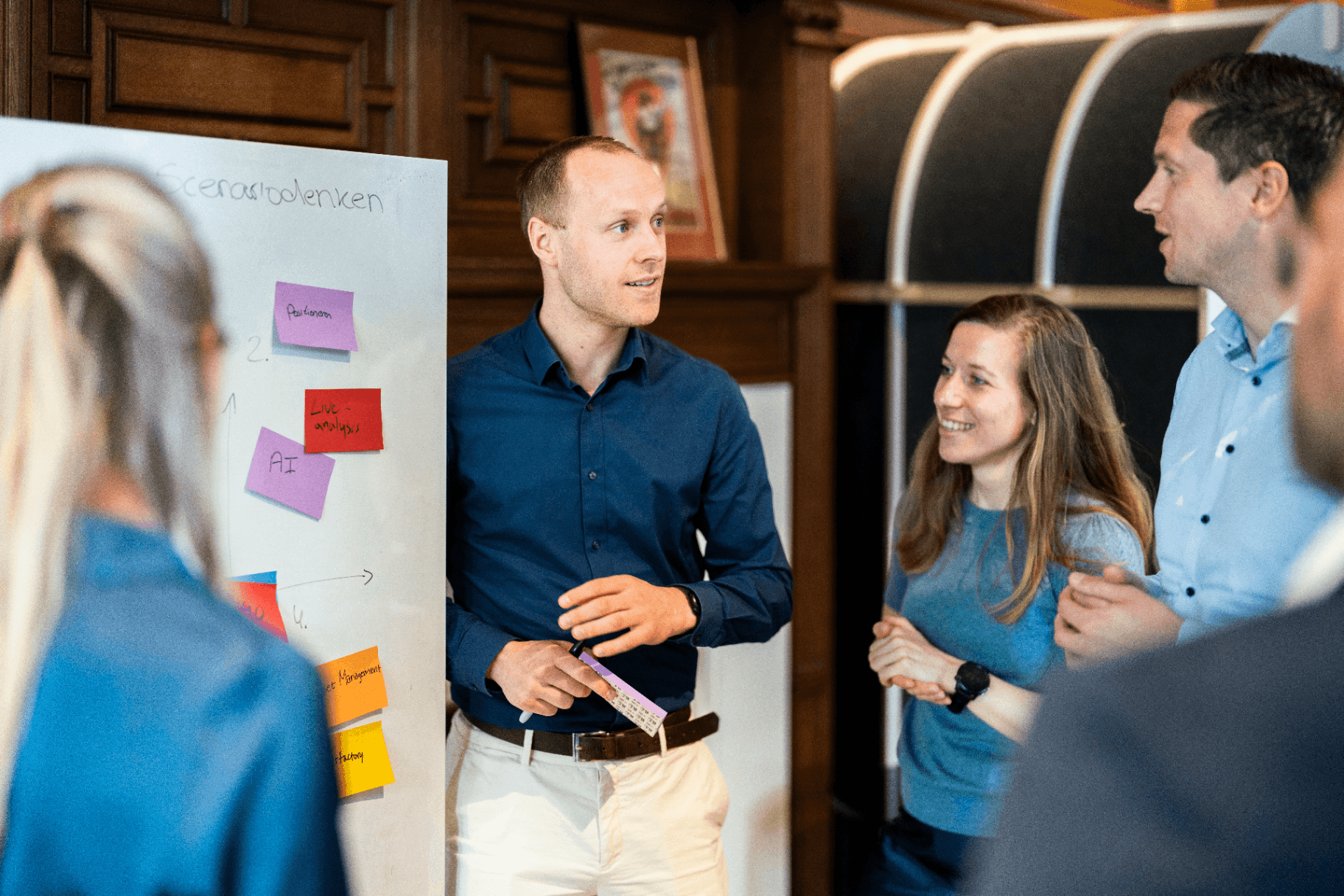
We start with a short diagnosis of current governance. From there we design the governance model together with the management team, in focused work sessions. We then translate the course into concrete choices and actions per team, using a fitting framework such as OGSM. At the same time we explicitly set up governance for larger changes, so strategic initiatives land in a manageable way and at the right pace.
"What I found strong is that Jester Strategy understood us straight away, despite the complex material. They sensed exactly where our need was and translated that into an approach that worked directly in our practice."
What makes our approach unique?
- •Integration of run and change in one governance model
- •Proven methodology (OGSM) as the backbone
- •Iterative and interactive: workable in practice
- •Embedded in the planning and control cycle
- •Clear roles and responsibilities at every level
What does it deliver?.
One rhythm, one language and one way of steering. The organisation stays predictable in operations and agile in change. Strategy becomes a continuous steering process.
Frame · Annual rhythm
Run
- •Daily performance
- •OGSM as annual plan
- •Doing and adjusting sessions
Change
- •Fundamental renewal
- •Project portfolio (PPM)
- •Short-cycle working
Result
P&C cycle: assurance, accountability and adjustment
Getting started: four phases.
- 1.Diagnosis. Map current governance: rhythms, roles, friction points.
- 2.Design. Design the governance model with the management team in work sessions.
- 3.Translation. Translate the course into choices and actions per team (via OGSM).
- 4.Embedding. Anchor in the P&C cycle with fixed rhythms and decision moments.
When is a governance model relevant?
Strategy does not land in execution
Run and change collide
No shared rhythm of planning and adjusting
Roles and responsibilities are unclear
The organisation is professionalising or scaling up
Need for one language for steering at every level
References
Delivery in practice.












Delivery knowledge base
Blogs & articles.






Ready for the next step?
Plan a no-obligation introductory call. We are happy to think along with you about your strategic challenge.
Schedule an introductory call