Why change capability is becoming the most important business function in food & agri
The transformation that is never finished
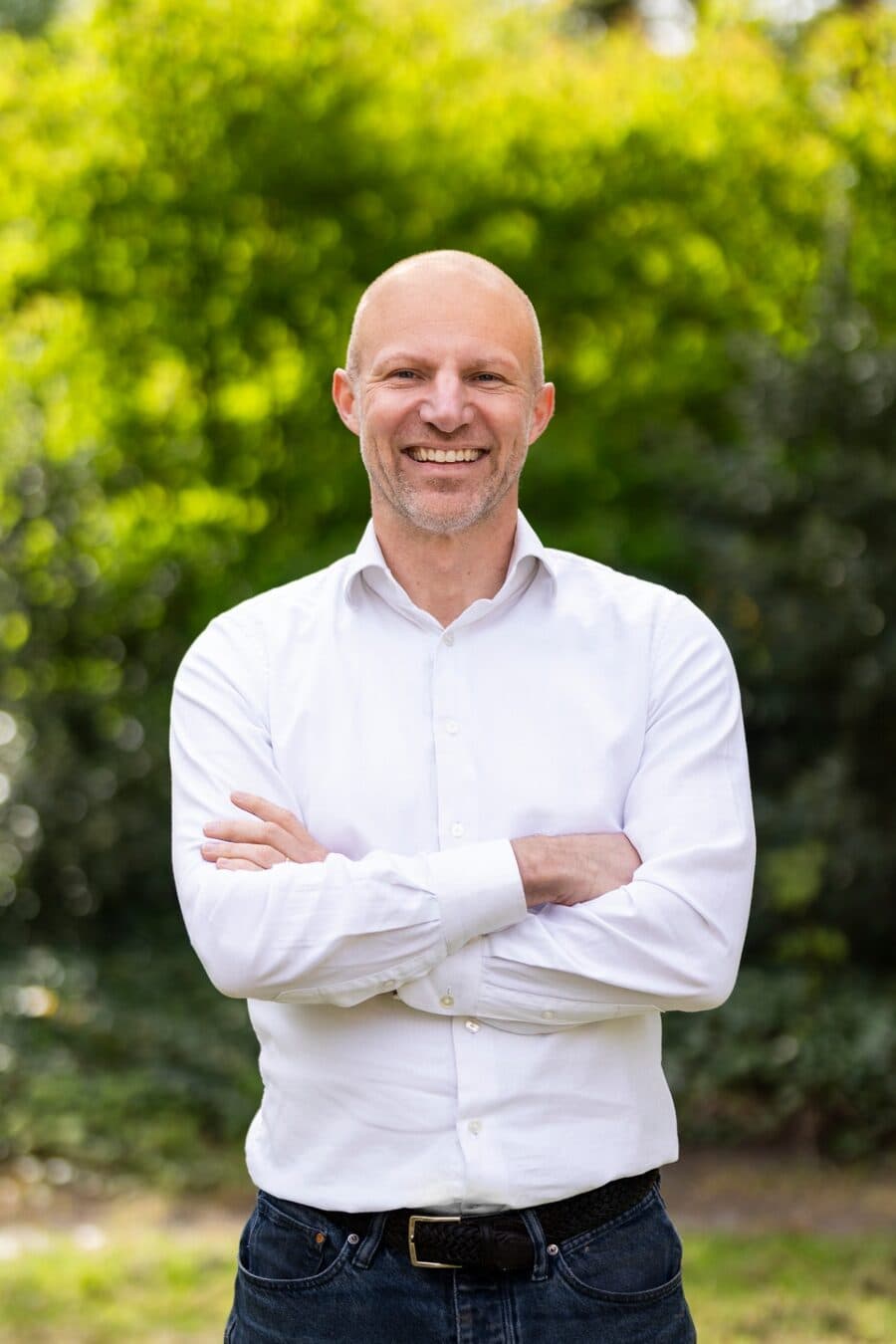 Pim Pilon
VISION PAPER
The transformation that is never finished
Why change capability is becoming the most important business function in food & agri
Pim Pilon, Principal & strategist, Jester Strategy, July 2026
Between 1800 and 1900 the world changed profoundly: steam power, railways, electricity, the telegraph. One century. Between 1980 and 2000 something comparable happened in twenty years: the personal computer, mobile telephony, the internet. And between 2020 and 2025? A pandemic that brought global supply chains to a halt, a war on the European continent, an energy crisis and the breakthrough of artificial intelligence. Five years.
The figures behind that acceleration are sobering. The telephone took decades to reach a hundred million users. Instagram took two and a half years. ChatGPT: two months.1 Every new technology spreads faster than the last, and there is no reason at all to assume that trend will stop.
This paper is about what that acceleration means for medium-sized businesses in food & agri. The proposition is simple, but its consequences are not: transformation is no longer a one-off event, but a constant. That calls for a fundamentally different way of organising your company, and for an honest answer to the question of whether your people can still keep up with this pace.
Change is no longer a wave, but the climate
Generations of directors were raised on the idea that change comes in waves. A crisis or an opportunity presents itself, you organise a change programme, you get through it together, and afterwards calm returns. Transformation as a renovation: annoying while it lasts, but with a completion date.
That model no longer holds. The waves follow one another so quickly that they merge into each other. Whoever made their supply chain crisis-proof in 2020 faced energy and cost inflation in 2022, new sustainability regulation in 2023, and the question of what AI would do to their business model in 2024. There is no longer an 'afterwards'. Change is not a spell of bad weather that blows over; it is the climate in which you do business.
That raises an uncomfortable question that is rarely asked out loud in boardrooms: can we, as people, actually handle this? In practice we see the symptoms of the opposite. Change fatigue on the shop floor. Middle managers who greet yet another initiative with a sigh. Programmes that stall halfway because the organisation is simply full. The limit of what organisations can absorb in terms of change is not technical or financial; it is human. So anyone who wants to organise transformation as a constant has to start with people. More on that later.
The pressure on food & agri comes from six directions at once
For food & agri, that constant change is no abstraction. The pressure is concrete, measurable and comes from several directions at the same time.
Affordability for the consumer. Food inflation averaged 4 per cent in 2025, peaking at just over 7 per cent in April; cumulatively, groceries have become an estimated 30 per cent more expensive since 2021.2 The consumer is inflation-weary, buys more own-brand and compares more sharply than ever. Every price increase you pass on is felt immediately at the till.
Margin and cost pressure. Labour costs, energy and raw materials such as cocoa, coffee and dairy remain expensive. According to Rabobank, food manufacturers will have to raise their prices by 5 to 10 per cent towards 2027 to cover the increased costs, while that same consumer will not simply accept price increases.3 The margin is squeezed between two walls moving towards each other.
Tension between retailer and manufacturer. Large producers openly state that passing on cost increases to retailers is proving difficult.4 Negotiations are hardening, and the regulator is watching: since September 2025 the Dutch competition authority (ACM) has been investigating how prices are built up across the chain.5
Security of supply and geopolitical uncertainty. Shrinking livestock herds, environmental policy, animal diseases and a lack of succession are limiting the supply of raw materials; processors are struggling with overcapacity and having to close factories.6 Add trade tensions, export uncertainty and climate risks, and 'reliable delivery' has become a strategic achievement rather than a hygiene factor.
Artificial intelligence. AI is rapidly shifting from experiment to the core of operations: demand forecasting, quality control, recipe development, administration. The question is not whether your competitor is deploying AI, but how much faster it makes them. And unlike earlier waves of technology, this one does not require years of adoption time; the tools are there tomorrow.
Consolidation. In the North-West European food industry there are around 370 mergers and acquisitions every year; in a quarter of these the acquisition target is an SME.7 Medium-sized players feel the choice ever more urgently: scale and cost leadership, or specialisation in a niche. Standing still in the middle is becoming the most expensive option.
Each of these six could fill a strategic agenda on its own. They arrive at the same time, they reinforce one another, and none of them is temporary. That is precisely the point: this is not a storm you sit out. This is the new weather.
Six stories from practice
What does that look like around the boardroom table? Six situations we witnessed at close hand over recent years, anonymised but not invented.
The private-label producer that could not keep up with demand. Growth sounds like a luxury problem, but when retailers moved en masse to own brands, production, planning and staffing seized up. Delivery reliability fell at exactly the moment when customers began to watch it more closely. The real transformation was not running more volume, but redesigning the operating model: integrated planning, deliberately choosing which customers get priority, and investing in capacity and in people.
The family ingredients business that saw a market evaporate. New regulation put an end, within a few years, to a product-market combination that had underpinned the company for decades. The lesson is hard but instructive: portfolio risk lies not only in the market, but also in the public domain. Whoever only moves once the law takes effect has started too late.
The national caterer that drastically simplified its offering. Cost pressure forced choices: fewer recipes, fewer suppliers, smarter purchasing. Painful for craftspeople who took pride in their variety. But the simplification freed up money and attention for what the customer truly pays for, and gave the organisation the breathing space to handle the next change.
The large producer that returned to its core. Years of diversification had produced a tangle of activities, each absorbing attention, capital and management time. The way back, divesting, focusing, strengthening the core, felt like a loss, but proved the key to restoring margin and market position. Sometimes the most important transformation is a return.
The seed breeder faced with questions about climate. Customers increasingly ask for varieties resistant to drought, heat and salinisation. Breeding runs on long cycles: today's choices determine the offering ten years from now. Climate thereby shifted from the sustainability paragraph to the heart of the R&D agenda, and forces investment in a future that cannot be guaranteed.
The meat-substitute producer that acquired its biggest competitor. In a market that cooled after years of hype-driven growth, this producer chose consolidation: scale to bear the costs and to hold on to shelf space. The acquisition itself was the easy part. Integrating two companies, each with its own culture and brand pride, in the middle of a market that is itself still in full motion, that is the transformation.
The pattern behind the stories
Six companies, six different triggers: growth, regulation, cost, focus, climate, consolidation. Yet the underlying pattern is the same. None of these businesses was finished after one change programme. As soon as one transformation was under way, the next one presented itself, often from a corner no one was watching.
What these companies really needed was not a project. It was a capability: the ability to keep changing without breaking the daily operation, and without breaking the people. That capability does not arise by itself. Like quality or food safety, it has to be deliberately organised.
And that begins with a simple truth that transformation plans systematically skip over: organisations do not change. People change. One by one, each at their own pace, each with their own reasons to move along or to drop out.
An operating model for constant change
How do you organise a company that can handle change as a constant? Two principles form the foundation.
First stable, then agile. Sustainable change is only possible if the operation runs stably. That sounds paradoxical, but whoever fights fires every day has no hands free to build. An organisation whose basics rattle, processes that stutter, data no one trusts, roles that overlap, has no change capacity, however ambitious the plan may be. The order is therefore inexorable: first get the operation in order, only then scale up the change portfolio. Stability is not the opposite of agility; it is its precondition.
Change runs through people, one by one. Prosci's ADKAR model offers a useful framework here.8 It describes the five steps every individual goes through during change: Awareness (knowing why), Desire (wanting to take part), Knowledge (knowing how), Ability (actually being able to) and Reinforcement (keeping it up). The strength of the model lies in the diagnosis: it forces you to look at where change truly dies in your organisation. Often that is not at the knowing, the newsletter has gone out, the town hall has been held, but at the wanting or the being able. And the step most often skipped, Reinforcement, is precisely the most important one under constant change: without embedding, every change erodes as soon as the next one begins.
What does this mean in concrete terms for your operating model? Four elements recur among companies that succeed.
First, a fixed change rhythm: for example a quarterly cycle in which the management team prioritises, starts and, just as importantly, stops. Stopping initiatives that no longer fit is the cheapest way to free up change capacity. Second, ownership in the line: change is not the task of a permanent parallel project organisation, but of the managers who also carry the operation. Third, a portfolio view: not pouring ten initiatives over the organisation at once, but deliberately metering them according to what teams can handle. And fourth, measuring change capability, adoption, workload, energy, alongside the classic project progress. A milestone plan showing green while the people are on red is not a success.
In the strategy programmes we guide at Jester Strategy, we see that the strategy itself is rarely the problem; the realisation is. That is why we treat transformation not as an afterthought, but as a design question: at the very moment the strategic choices are made, the question of what the organisation and the people can handle, and how the steering model keeps supporting that change, belongs on the table.
Three questions for your own management team
Would you like to know where your organisation stands? Ask your management team these three questions tomorrow.
- Does our foundation run stably enough for us to change, or are we mainly fighting fires?
- Where does change die for us: at the knowing, the wanting or the being able?
- If change is a constant, then who is the permanent owner of our change capability?
The honest conversation that follows these questions says more about your future-readiness than any strategy document. Because the question is not whether your business will have to transform again. The question is whether it will be ready the next time.
The world is changing. What are you doing?
About the author
Pim Pilon is a Principal at Jester Strategy and has more than twenty years of experience as a sparring partner for boards in the fields of strategy, supply chain and transformation. He previously worked as an adviser for family businesses in food, industry and retail, and held executive roles in the food industry. His strength lies in strategy, supply chain transformations and business integrations for corporates, private equity and family businesses. Pim can be reached at p.pilon@jester.nl.
Notes
Footnotes
-
See among others 'How ChatGPT Managed to Grow Faster Than TikTok or Instagram', Time, 8 February 2023; and Epoch AI, 'After the ChatGPT moment: Measuring AI's adoption', July 2025. Available at: https://epoch.ai ↩
-
Statistics Netherlands (CBS), Consumer Price Index; see also Beleiduitgelegd, 'Inflatie Nederland 2026: waarom boodschappen duur blijven ondanks dalende cijfers', March 2026. Available at: https://beleiduitgelegd.nl ↩
-
RaboResearch, 'Foodsector 2026: herstel in zicht, maar met hobbels op de weg', Rabobank, July 2026. Available at: https://www.rabobank.nl/kennis ↩
-
'Lage voedselinflatie is stilte voor de storm', Nieuwe Oogst, 9 June 2026. ↩
-
The ACM investigation into supermarket prices and how prices are built up across the chain began in September 2025; the results are expected in the summer of 2026. ↩
-
ABN AMRO, 'Voedingsindustrie blijft licht groeien ondanks rem op aanvoer', 19 December 2025. Available at: https://www.abnamro.nl ↩
-
ABN AMRO, 'Foodbedrijven blijven aantrekkelijk voor overname', 2025, based on Mergermarket data on North-West Europe since 2021. Available at: https://www.abnamro.nl ↩
-
Jeffrey M. Hiatt, ADKAR: A Model for Change in Business, Government and our Community, Prosci Learning Center Publications, Loveland (CO), 2006. ↩
Download the full whitepaper
Download PDF