Whitepaper: strategy formation in seed breeding
Strategy on the cycle of a crop.
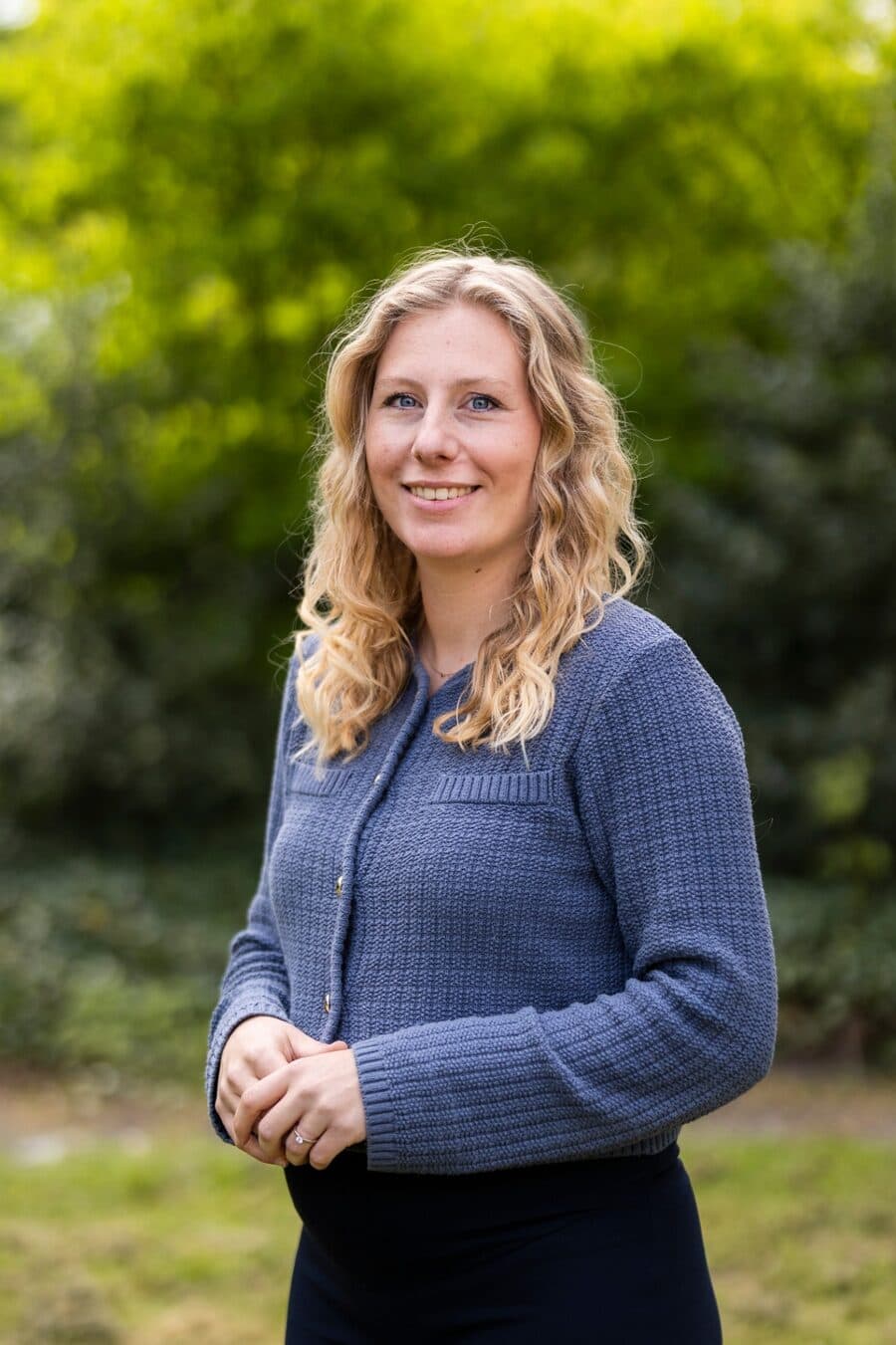 by Iris Boom
WHITE PAPER
Strategy on the cycle of a crop
Why seed breeders cannot borrow their planning from other sectors
An exploration by Iris Boom MSc, Strategy Consultant
Summary
Seed breeding is one of the few sectors in which the strategic horizon of an organisation is shorter than the lead time of its core product. A new variety only comes to market seven to fifteen years after the first cross, while board terms, regulatory trajectories and market demand change at a much faster pace. For directors of seed-breeding companies this means that today's strategic choices only deliver results in the world of the day after tomorrow, a world that cannot yet be known.
This exploration describes the time problem in seed breeding, sketches three tensions we see returning time and again in practice (climate adaptation, sector consolidation and regulatory uncertainty) and formulates three principles for strategy formation that fit long lead times and high external uncertainty. Finally, the white paper describes how scenario planning and CUBE trajectories can help seed breeders make strategic choices sharper and underpin them more resiliently.
A tomato that began in 2014
The tomato that comes onto the shelves for the first time this summer was first crossed around 2014. At that time a breeder was working with a parent line that had been selected three to four years earlier. So the design of the variety began, in a sense, in 2010, fifteen years ago. In those years Brexit was announced, the world shouted that data was the new gold, three cabinets came and went in the Netherlands, and the European Green Deal fundamentally changed the playing field for agri-food.
The tomato knew nothing of that. It grew on, generation after generation, towards the plan that was set out in 2010.
This is not a rare exception. It is how seed breeding works. A traditional breeding programme takes seven to fifteen years, depending on the crop1. And even with modern techniques such as CRISPR-Cas, the lead time for a commercially successful variety rarely drops below six years. That makes seed breeding one of the few sectors in which the strategic horizon of an organisation is shorter than the lead time of its core product.
For directors of seed-breeding companies this means something uncomfortable: the strategic choices you make today only deliver results in the world of the day after tomorrow. And you do not know that world.
The time problem in seed breeding
Strategy formation is in a sense always about time. You determine where the organisation wants to be in three, five or ten years, and you set the deployment of people and resources accordingly. For most sectors that is a manageable exercise: the business cycle, the investment horizon and the term of office run reasonably in parallel. A software company that decides tomorrow to develop a new product line can deliver to customers within eighteen months. A retailer can switch within a season.
In seed breeding these rhythms diverge. In fact, they run straight across one another.
Four rhythms that diverge
The breeding cycle is the slowest. Between the first idea for a variety and the first commercial seeds lies seven to fifteen years. For some crops (fruit varieties, trees, sugar beets) it can run to more than twenty years2. In that time the breeder must select, multiply, cross, test and select again hundreds to thousands of lines. Each step depends on the natural growing season of the crop. You cannot ripen tomatoes in December to accelerate the cycle.
The market cycle is faster, but more capricious. What the grower wants today (a variety that performs well under dry conditions, or that is resistant to a specific fungus) may be out of date in seven years. Diseases mutate. Climates shift. Consumer preferences change. Retail asks for new taste profiles, different colours, different shelf life. A variety that looked perfect in 2020 may be commercially undervalued in 2030.
The regulatory cycle is the most unpredictable. The European Union adopted new rules on 21 April 2026 for plants developed with new genomic techniques (NGT)3. Those rules apply from mid-2028, while the discussion on patents on NGT plants has not yet been settled4. For a breeder who already started an NGT trajectory in 2024, this means that the rules have changed under their project while the project was still running.
The governance cycle, finally, is the shortest. A typical strategy period in the SME sector spans three to five years. A political cabinet term is four years. A supervisory board often recalibrates yearly. Shareholders look at quarters.
Four rhythms, four paces. And seed breeders have to serve them all at the same time.
Three tensions we encounter in practice
At Jester we work with companies from a wide range of sectors, and we see how this time problem in seed breeding translates into concrete strategic dilemmas. Three tensions return time and again.
Climate adaptation versus breeding pace
The urgency around climate adaptation is not an abstraction for the seed sector but a direct assignment. Growers worldwide are asking for varieties that tolerate drought, last longer on the field and require less crop protection. The Dutch government and the European Commission have placed this ambition explicitly on the seed sector5.
But the breeding cycle cannot be accelerated by policy ambition. A variety applied for in 2026 for climate resistance comes to market at the earliest in 2034. By that time the relevant climate conditions (precipitation patterns, heatwaves and disease pressure) may be substantially different from when the project began.
That does not mean breeders are sitting still. It means they have to make choices on the basis of future projections. And future projections are by definition uncertain.
Consolidation versus mid-tier strategy
The international seed sector is consolidating at a rapid pace. The top five global players, Bayer, Corteva, Syngenta, BASF, Limagrain, by now control the largest part of worldwide seed trade. At the same time, the Dutch seed sector is still largely made up of SMEs: around ninety per cent of the roughly two hundred professional breeding companies in the Netherlands belong to the SME sector6.
For the Dutch (mid-)group including, among others, Rijk Zwaan, Bejo, Enza, Limgroup, Barenbrug and smaller specialists, this raises a fundamental strategic question. Scale is an advantage in R&D investment, in distribution, in negotiating power towards retail. But scale comes at a price: less agility, more distance from the grower, more dependence on a limited number of global markets.
Companies in this mid-tier have to choose where they want to stand in a sector in which large scale and specialisation are growing further apart. And that choice is locked in for the duration of a breeding programme, not for one board term.
Regulation versus investment horizon
The third tension is perhaps the most tangible: the relationship between regulatory uncertainty and investment decisions. Anyone investing in an NGT trajectory now has to take account of rules that only apply from mid-2028, and of patent issues that may remain unresolved for years4. Anyone who waits until the rules are crystallised lags behind the facts.
This dilemma is not unique to NGT. Plant breeders' rights, the admission requirements for varieties on the EU varieties list, and the rules around crop protection are all subject to change. For a breeder, each regulatory trajectory means a new variable in an already complex investment decision.
What good strategy formation demands here
The combination of long cycles, rapid change and inevitable uncertainty makes classic strategy formation with a fixed five-year plan and a phased implementation trajectory ill-suited to seed breeding. Not because the plan would be wrong, but because the plan is already outdated at the moment it is adopted.
In our work with organisations facing comparable long lead times (think of infrastructure, the energy transition or housing associations) we see three principles that do work.
Work with scenarios, not predictions
Whoever bases their strategy on a single future picture is vulnerable as soon as that picture does not materialise. Whoever works with several consistent future pictures, for example four scenarios built around the two greatest uncertainties in the sector, can wind-tunnel their strategy against different realities. The question shifts from "what is going to happen?" to "which choices hold up in most futures?" That is a different and, in this sector, more productive way of thinking.
Distinguish between what must be fixed and what can remain flexible
In a breeding programme some decisions are irreversible once taken: a choice for a particular parent line, an investment in a new location, a multi-year partnership with a research institute. Other decisions are, on the other hand, eminently suitable for step-by-step adjustment: market introduction strategy, commercial pricing model, choice of sales channels. Good strategy formation explicitly records which decisions belong to which category, and steers accordingly.
Plan not just the variety, but also the decision
In sectors with long cycles it is tempting to let all attention go to the substantive process: the breeding itself. But just as important is the decision-making process that steers the programme. When do we evaluate? Which signals give cause for adjustment? Who has the mandate to make which choice? A breeding programme running ten years needs a governance that fits that horizon, not the board meeting of next quarter.
How we can help you with this
At Jester we have been working for over thirteen years with organisations that make strategy under uncertainty. For seed breeders we see two approaches that fit particularly well with the time problem of the sector.
Scenario planning is our method to test strategic choices against several future pictures. Together we map the external developments affecting your sector: climate change, regulation, consumer preferences, geopolitical developments, technological breakthroughs. We identify which of those are most uncertain and most impactful, and build four consistent scenarios for your sector on that basis. Subsequently we wind-tunnel the existing strategy and breeding portfolio together against those scenarios. What holds up in all four possible future worlds? What only in one? Which new options come into view? The result is not a prediction, but a more resilient strategy.
A CUBE trajectory is our integral approach to strategy formation. We go through six steps in it: from sharply formulating the design brief (what exactly is the question?), via an inside-out analysis (where do you stand now in capabilities, portfolio, organisation?) and an outside-in analysis (which developments affect the organisation, and which scenarios from that are relevant?), to developing strategic options and making strategic choices. We close with planning that fits the horizon of your work, so not one fixed plan, but a rolling strategy that is recalibrated annually without letting go of the long lines.
Both approaches are essentially the same. A CUBE trajectory is more intensive and broader in scope; scenario planning can be deployed more specifically on a particular strategic question. In practice they are often combined: a CUBE as the backbone for the entire strategy, and additional scenario sessions when a specific issue, for example the choice of a new breeding branch or an internationalisation step, calls for it.
Three questions to begin with
Whether you are going to work with scenario planning yourself or do it together with us, these three questions help to sharpen the conversation about strategy in your organisation.
Which decisions you take this year will still be in force in ten years? Make that list explicit. It is a shorter list than you think, and precisely those decisions deserve the most analytical weight.
Which two external developments are for your sector both most uncertain and most impactful? Not the developments you are certain will come, but those whose outcome you do not know. That is where the strategic room lies.
On which signals would you be willing to recalibrate your strategy? Not every change deserves a course adjustment, but some do. By naming in advance which signals count, you avoid both paralysis and hasty reactions.
Making strategy in a sector in which your core product ripens longer than your governance cycle lasts is not an easy task. But it is not impossible either. It calls above all for a different kind of plan: less a blueprint, more a compass. An approach that holds the long lines and at the same time leaves room for the world you do not yet know.
We would be happy to talk with you about this.
About the author
Iris Boom MSc is Strategy Consultant at Jester Strategy. She combines two master's degrees (Management & Economics at Wageningen University and Strategic Management at Radboud University) with over six years of experience as adviser for emerging markets, in which she supported SMEs, multinationals and governments on international growth issues. Within Jester she focuses, among other things, on the agri-food sector, including seed breeding. Iris can be reached at i.boom@jester.nl.
Footnotes
Footnotes
-
Plantum, De sector — plantenveredeling, industry association for breeding, propagation and rearing of seeds and young plants. Available at: https://www.plantum.nl/hoofdnavigatie/over-de-sector/de-sector ↩
-
Bejo Zaden, "Plantenveredeling biedt het antwoord", interview with John-Pieter Schipper and Bert Schrijver. Available at: https://www.bejo.nl/magazine/plantenveredeling-biedt-het-antwoord ↩
-
Council of the European Union, New genomic techniques: Council adopts new rules to boost sustainable and competitive EU food systems, press release 21 April 2026. Available at: https://www.consilium.europa.eu/en/press/press-releases/2026/04/21/ ↩
-
Morrison Foerster, April 2025 Update on Regulation of New Genomic Techniques in the EU, April 2025. Available at: https://www.mofo.com/resources/insights/250425-april-2025-update-on-regulation ↩ ↩2
-
Plantum, Veel uitdagingen voor veredeling en zaden met Toekomstvisie gewasbescherming 2030, report of mini-symposium "Seeds Meets Technology", September 2023. Available at: https://www.plantum.nl/themas/ ↩
-
Wageningen University & Research and Plantum, Sowing Seeds of Knowledge — Kennis op Maat-project, 2020. Cited in: "WUR en Plantum maken plantenveredeling beter toegankelijk", Nieuwe Oogst, 25 November 2020. ↩
Download the full whitepaper
Download PDF