How agri-input suppliers hold course while their customers wait
Waiting for clarity is not a strategy.
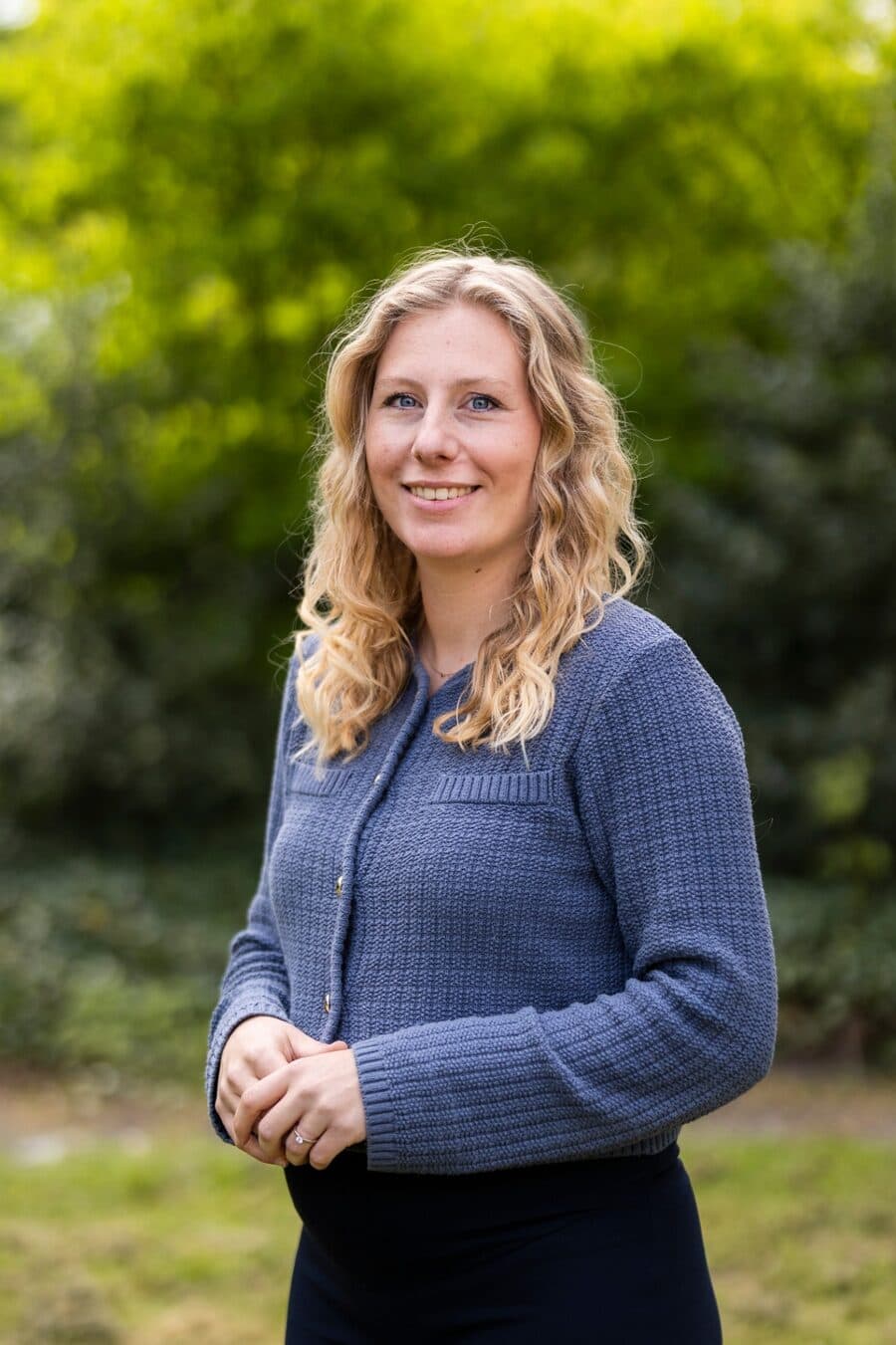
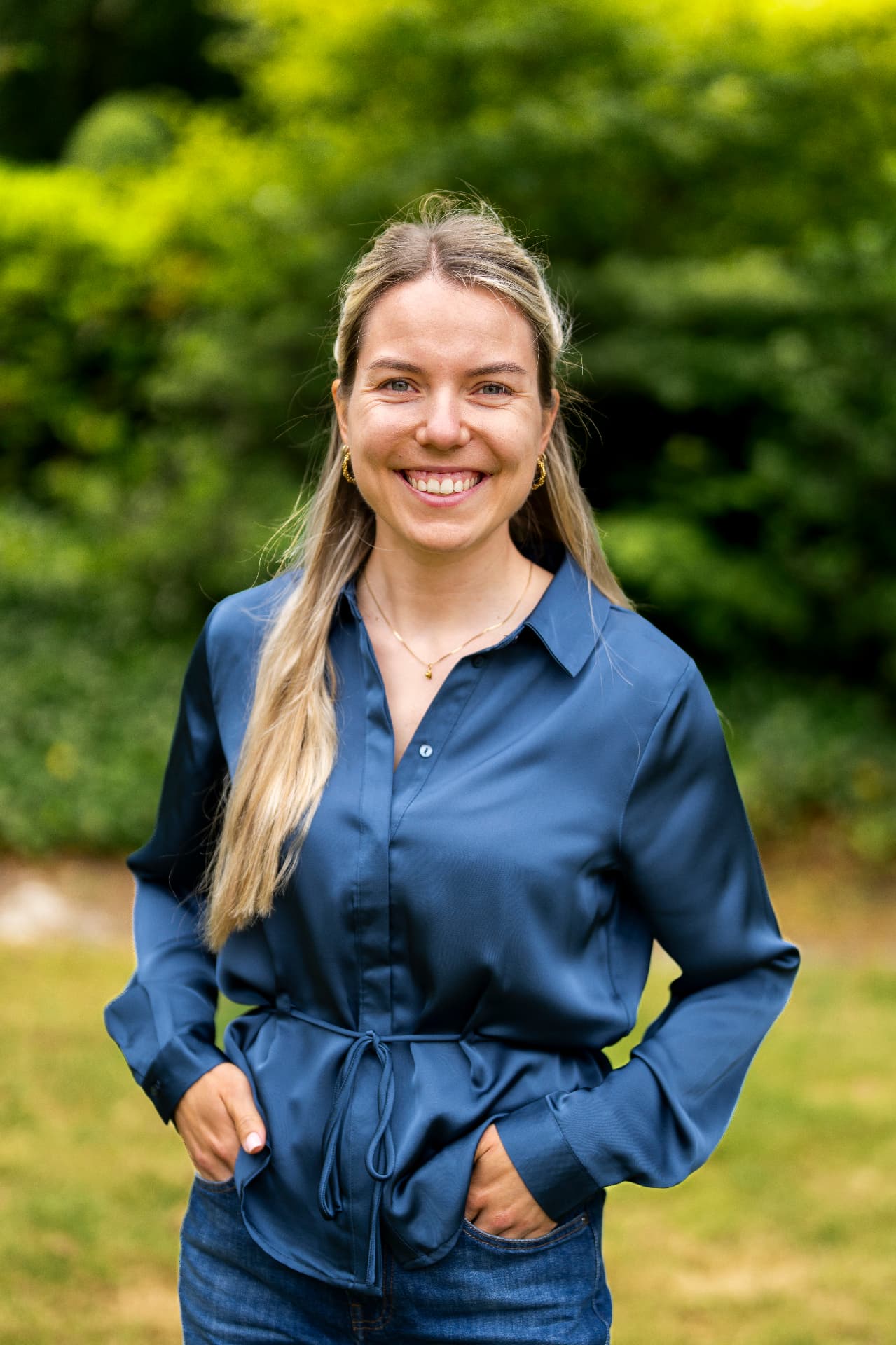
A white paper by Iris Boom & Lara Koopman, Jester Strategy · June 2026
The world is changing. What are you doing?
Imagine you are leading a breeding company. This year you have to decide where to direct the research budget for the coming decade: which traits, which crops or varieties, which markets. At the same time you read that your customers, the farmers, do not know which crop they are going to grow in three years' time, or even whether they will still be there in three years' time. One month Brussels announces a halving of crop protection, the next that plan falls. The cabinet falls, the agricultural accord collapses, the herd shrinks, or perhaps not as much.
Which way do you go? And, more importantly: can you afford to wait until it becomes clear?
That is the question facing the whole agri-input sector today, genetics, ingredients, feed, animal health and crop protection. This paper is about an uncomfortable truth: precisely when the chain is indecisive, standing still is the most expensive choice you can make.
A chain that cannot choose
The strategy of an agri-input supplier follows demand in the chain. You do not sell to the consumer, but to farmers, cooperatives and integrators, and they add value further on. Your direction follows their direction. As long as they move, you can move with them. The problem today is that they are not moving, because the signals contradict each other.
The figures show how much is at stake. The Netherlands exported almost €129 billion in agricultural goods in 2024. Behind that figure stand tens of thousands of businesses whose investment decisions determine the demand for seed, feed, health and protection. But those businesses are on the brakes. Farmers have for years been asking for long-term clarity so they can invest in a future-proof business; that clarity does not come, and with the fall of the cabinet it became no clearer.
And the signals that do exist point in different directions. One estimate assumes a shrinkage of the herd of 15 to 18 per cent in 2030. The Agricultural Accord, which ultimately collapsed, counted on 25 to 30 per cent shrinkage in 2035. Is it one, or the other? No one knows. And as long as the farmer does not know whether they will keep more, fewer or no animals in five years' time, the feed and health supplier does not know what to focus their portfolio and capacity on.
So indecision propagates through the chain. If your customer cannot choose, you cannot either, unless you change the way you choose.
Two reflexes that make the problem bigger
There are two natural reactions to this situation. Both feel sensible. Both make the problem larger.
Reflex 1: waiting
"We will wait until policy is clear, then we will choose." It sounds prudent. The uncomfortable part is that clarity may never come, and your lead times do not allow waiting. Developing a new product or seed takes up to thirteen years. A new active substance costs ten to twelve years, an entirely new trait platform around twenty. Whoever waits three years for clarity wastes a third of a development cycle. The market does not wait. Waiting feels safe, but in this sector it is the most risky option there is.
Reflex 2: gambling
The opposite reflex: choose one future and put everything on that card. "We are convinced that gene editing will be released, so we are going all-in on NGT traits." That is a big bet. It can pay off enormously or break the company. Bear in mind: since a ruling by the European Court of Justice in 2018, gene editing was treated as strictly as GMOs, and it took until April 2026 for the EU to adopt a workable NGT framework. Anyone who in 2019 bet the company on rapid easing sat in uncertainty for seven years. Anyone who wrote it off completely is now playing catch-up.
Both reflexes make the same mistake: they treat the future as one thing you have to guess correctly. Strategy under uncertainty is not about guessing well.
Uncertainty is not a reason not to choose; it is a reason to choose differently
The way out begins with a sharp distinction: what is really uncertain, and what is not? In practice these two are constantly mixed up. A trend is a development with major impact whose direction is reasonably predictable. An uncertainty also has major impact, but is unpredictable in direction, speed or effect.
Sort the developments in agri-input in this way and much of what feels uncertain turns out to be a trend. The pressure to produce more sustainably is rising, not falling, even though the European crop-protection regulation was withdrawn. The direction (less chemistry, more biological and precision) is set; only the pace and the instrument are uncertain. Consolidation, data and precision agriculture are pushing on. The protein transition and the shrinkage of the herd in north-western Europe are reasonably certain in direction; only the scale and speed are not.
What is truly uncertain is therefore mostly about pace and form, not direction. That distinction is liberating: on the trends you can already make firm choices now, and you preserve flexibility for the real uncertainties.
Build a strategy that holds up in more than one future
Here scenario thinking pays back its investment. Not as a prediction exercise but as a stress test. The approach is familiar: name the two critical uncertainties (high impact and high unpredictability), span an axis cross with them, and work the four quadrants out into plausible, internally consistent future pictures. The aim is not to choose the "right" scenario. The aim is to find the choices that hold up in all scenarios.
Those choices come in several kinds. There are no-regret steps that make sense in every scenario. There are growth options: small first steps you scale up as soon as a scenario unfolds. There are hedge options against the unfavourable scenario, and learning options, pilots with which you buy information early. And sometimes there is that one deliberately taken big bet, dosed so that a miss does not knock the company over.
A good strategy mixes these kinds. It is not a single wager; it is a portfolio of moves matched to a portfolio of futures.
This is not theory. We have walked this road with international players in the sector. Our experiences show a real pattern: strategy under uncertainty is not a document you finish, but a rhythm you keep up.
Use the three horizons to keep both feet on the ground: defend and optimise today's business (horizon 1), build the bridges to tomorrow (horizon 2) and keep options open on what is still taking shape (horizon 3). The indecisive chain mainly paralyses thinking on horizon 1. Your edge lies in continuing to move on horizons 2 and 3.
From dependency to antennas
And then the turnaround. Your dependency on the chain feels like a weakness. It can become your sharpest advantage if you build the antennas to feel the chain moving before your competitor does.
If your direction follows the direction of your customers, then the strategic question is not "what will happen?" but "what do we see first, and what do we do the moment we see it?" That calls for two things.
First an early warning system: decide in advance which signals tell you a scenario is unfolding: a vote in Brussels, a decision on the derogation, a tipping point in farmer sentiment, a move by a competitor. Follow those signals deliberately, not by reading the newspaper in the morning.
Second trigger points: decide in advance what you will do if a signal goes off. By deciding in advance, a paralysing surprise turns into a rehearsed move.
The chain is precisely indecisive because everyone is waiting on everyone else. The agri-input supplier who has already decided what they do under each future does not wait. They move as soon as the mist lifts a little. And that edge is, with lead times of a decade, worth more than any prediction.
Four questions to begin with
You do not need a finished strategy to start. You need four honest answers.
One: which of our "uncertainties" are actually trends and where can we therefore already choose now?
Two: which of our current investments are disguised "big bets" that only pay off in one future?
Three: which "no-regret" steps can we already take this month, regardless of where the chain moves?
Four: which three signals tell us that a scenario is unfolding and what do we then do, agreed in advance?
Anyone who answers these questions sharply discovers that indecision in the chain is no excuse to stand still. It is precisely the moment to make the difference.
How we help with this
At Jester Strategy we help agri-input suppliers choose direction when the market still hesitates. Not by predicting the future, but by designing together what holds up in several possible futures. We map the most important uncertainties, translate them into sharp scenarios and test what they mean for portfolio, investments, innovation and commercial choices. From that we distil the choices that are already robust now, the options you deliberately keep open and the big bets you do or do not want to take.
In doing so we bring structure, a proven approach and tested models. The unique choices that distinguish a company and are difficult to copy are not invented by us, but by the organisation itself. We guide that design process, challenge assumptions as real Jesters and ensure choices are translated into concrete actions. The result is not a strategy that disappears into a drawer, but a practical steering instrument to adjust as soon as the chain starts moving. In this way uncertainty turns from a reason to wait into a head start over competitors still searching for clarity.
The world is changing. What are you doing?
About the authors
Iris Boom MSc is Strategy Consultant at Jester Strategy. Iris combines two master's degrees (Management & Economics, Wageningen; Strategic Management, Radboud) with over six years of experience as an Emerging Markets adviser. She is specialised in strategy development, internationalisation and Agri-food, and has worked for, among others, Barenbrug, Limgroup and AgriFutures Australia. Contact: i.boom@jester.nl.
Lara Koopman MSc is Strategy Consultant at Jester Strategy. Lara studied Strategic Management (Radboud) and brings a background in the agricultural sector. She lived for several years in New Zealand and therefore moves easily in international contexts. Lara is specialised in strategy formation and scenario thinking and has worked for several agri-food organisations, including MLZ and AgriFutures Australia. Contact: l.koopman@jester.nl.