Whitepaper: scenario planning in the energy transition
The energy transition: stronger together, or a chance to win?
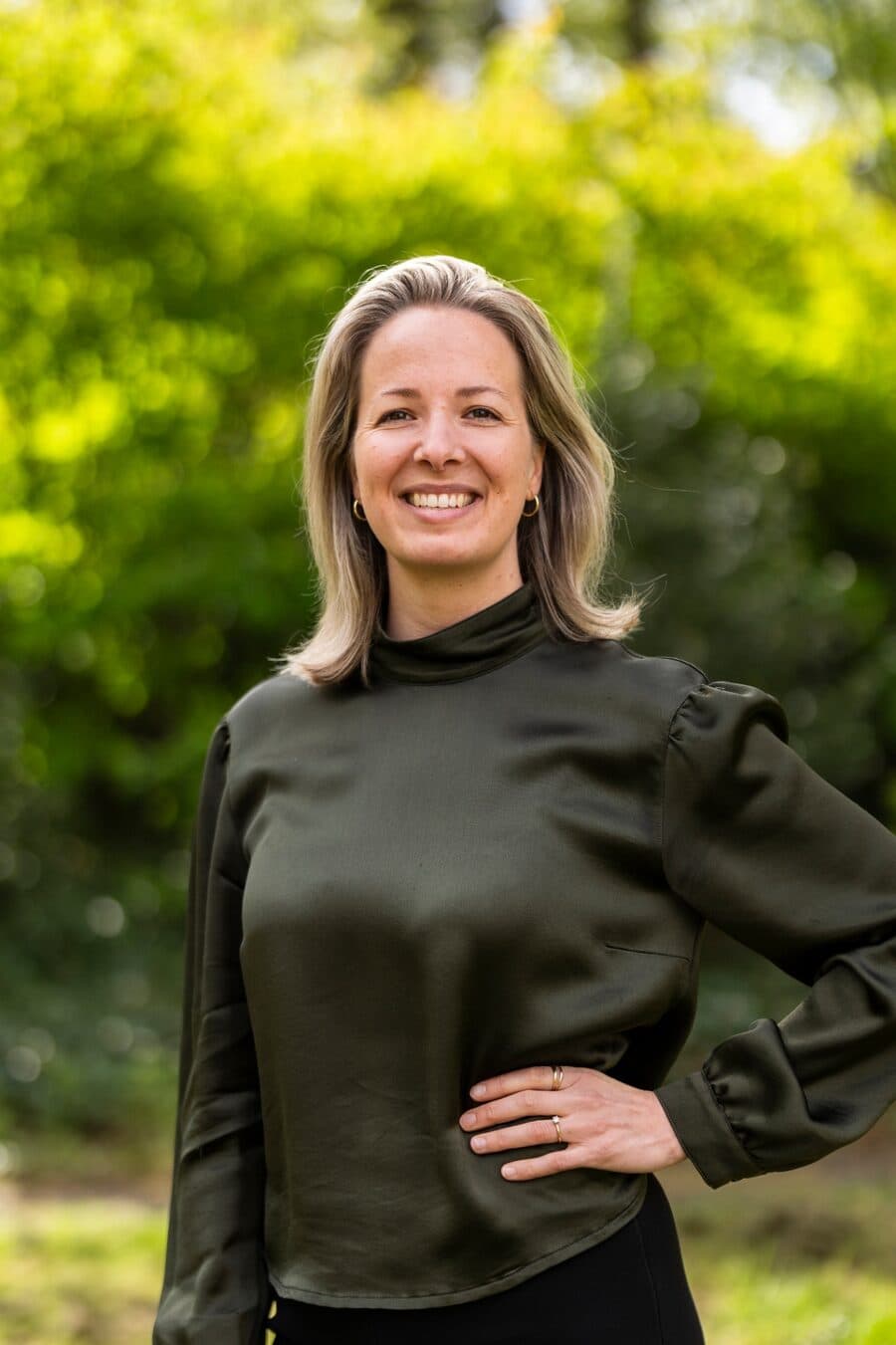 by Marie-Claire de Koning
Two answers to the same chaos
Perhaps I am ‘late to the party’, but I too have given in to Game of Thrones. I am not yet sure whether I am a fan, but it certainly intrigues me. Take Littlefinger's famous line in episode 6 of season 3: “Chaos isn't a pit. Chaos is a ladder.”
His adversary Varys sees chaos as a pit that swallows us all, and therefore holds on to the realm: the story that keeps us together. Read: solidarity and community. Littlefinger calls that story a lie and sees in the same chaos a ladder to climb up himself. Read: individualism and competition.
It made me think of the energy transition, because to my mind ‘chaos’ is a fitting word for it. A queue of almost 15,500 transmission requests1, politicians who keep reassessing the pace, businesses being told there will be no room to expand for years, housing corporations unable to get their heat pumps connected, and so on.
Everyone is in the same chaos, but not everyone chooses the same answer.
Which approach do you think is best: solidarity and community, or individualism and competition?
What is certain, and what is not
Before you answer that question, let me qualify my description of the energy transition as chaos straight away. In a trend study we carried out this autumn among more than twenty parties in the energy chain, a pattern stood out. The trends with the greatest impact are also the least uncertain. Electrification is continuing. The grid will remain full for the time being. And value is shifting from the kilowatt-hour itself to flexibility: whoever can steer and shift their consumption has something others need.
The uncertainty lies elsewhere. In the political pressure to slow the pace, in subsidies and tariffs that change, in rules about who gets priority on the grid. In short: that electrification continues, the grid stays full and flexibility is crucial is no longer uncertain. The pace and the rules of the game are. Whoever waits for The Hague to provide clarity is waiting for precisely the part that will stay uncertain the longest.
On your own strength, or climbing together?
So: no waiting, but getting to work. The only question is: from which perspective? One organisation looks for opportunities mainly in speed and its own strength. It applies for capacity early, invests in its own generation and storage, and uses its flexibility as negotiating leverage. Doing so makes it less dependent, and sometimes even indispensable.
The other organisation looks for those opportunities precisely in cooperation and community. It seeks out its neighbours, shares capacity and coordinates peaks. That is the obvious route for a housing corporation or a healthcare institution with a social mission, but also for an SME that is too small to get anything done on its own.
Which mindset suits your organisation? That question is bigger than the energy transition. For decades our society has swung back and forth between the collective and the individual. After the war we pooled our risks: in utility companies, in collective labour agreements, in the welfare state. From the 1980s onwards the weight shifted to market forces and personal responsibility. The energy sector followed exactly that route, from a regional utility that supplied everyone to a liberalised market in which every customer signs their own contract.
What is emerging now does not fit this binary approach. Organisations want to chart their own course, but for their growth they depend on a grid they share with their neighbours. You see it in energy communities, in businesses sharing a single connection, in housing corporations agreeing with the grid operator which neighbourhood goes first. That is not a return to the collective, nor is it individualism any more. It is independence that leans on cooperation. So the question is not whether you cooperate, but where you want to be able to fend for yourself and where you dare to be consciously dependent.
The real risk: not choosing
The risk does not lie in the wrong choice, but in no choice at all. There is a lot of looking at one another: at the grid operator, at politicians, at the neighbours. Complexity paralyses, and waiting feels sensible because it seems to cost nothing. But it does cost something: time, your place in the queue and room to manoeuvre. So how do you make good choices when so much is still uncertain?
It starts with distinguishing between what you already know and what is still uncertain. That knowledge often exists, but it is scattered both inside and outside the organisation. As long as it does not come together, everything feels equally uncertain. And whoever finds everything uncertain does not choose between their own strength and cooperation.
Chaos is rarely a lack of information. More often it is information that has not yet been put in order.
Navigating uncertainty starts with putting things in order
Putting things in order is exactly what scenario planning is for. Not to predict the future, but to get clear on what is fixed and what is open, specifically for your organisation. It takes three steps.
One: order trends and developments. List all developments and ask yourself, for each one, how much impact it has and how uncertain it is. Trends that are both high-impact and uncertain are top priority to explore further.
Two: choose the two uncertainties that really matter. Set them against each other and you get four pictures of the future.
Three: test your choices against the pictures of the future. A choice that works out well in every picture of the future is robust: you can make it tomorrow, without The Hague or the grid operator having to decide anything. A step that only pays off in one picture of the future calls for a plan B and a few signals to keep an eye on.
So the question is no longer whether chaos is a ladder, but how you navigate through chaos: on your own strength or by working together. Scenario planning helps you make well-founded choices in that. The chaos does not disappear, but it takes on a shape in which you can navigate. And that does not start with waiting for clarity, but with putting in order what you already know.
About the author
Marie-Claire de Koning is a Senior Consultant at Jester Strategy and works on strategic issues in the energy transition, for clients including housing corporations, development companies, grid operators and commercial parties.
This point of view is based on practical experience with scenario planning and strategy development in the energy transition. The views presented are those of the author, not of individual clients.
Footnotes
-
Netbeheer Nederland: https://capaciteitskaart.netbeheernederland.nl/totaal/afname ↩
Download the full article
Download article (PDF)