Beyond the noise of the day: why scenario thinking calls for executive space in elderly care
The day of tomorrow, and what comes after.
The day of tomorrow, and what comes after
Beyond the issues of the day: why scenario thinking demands boardroom space in the long-term care sector
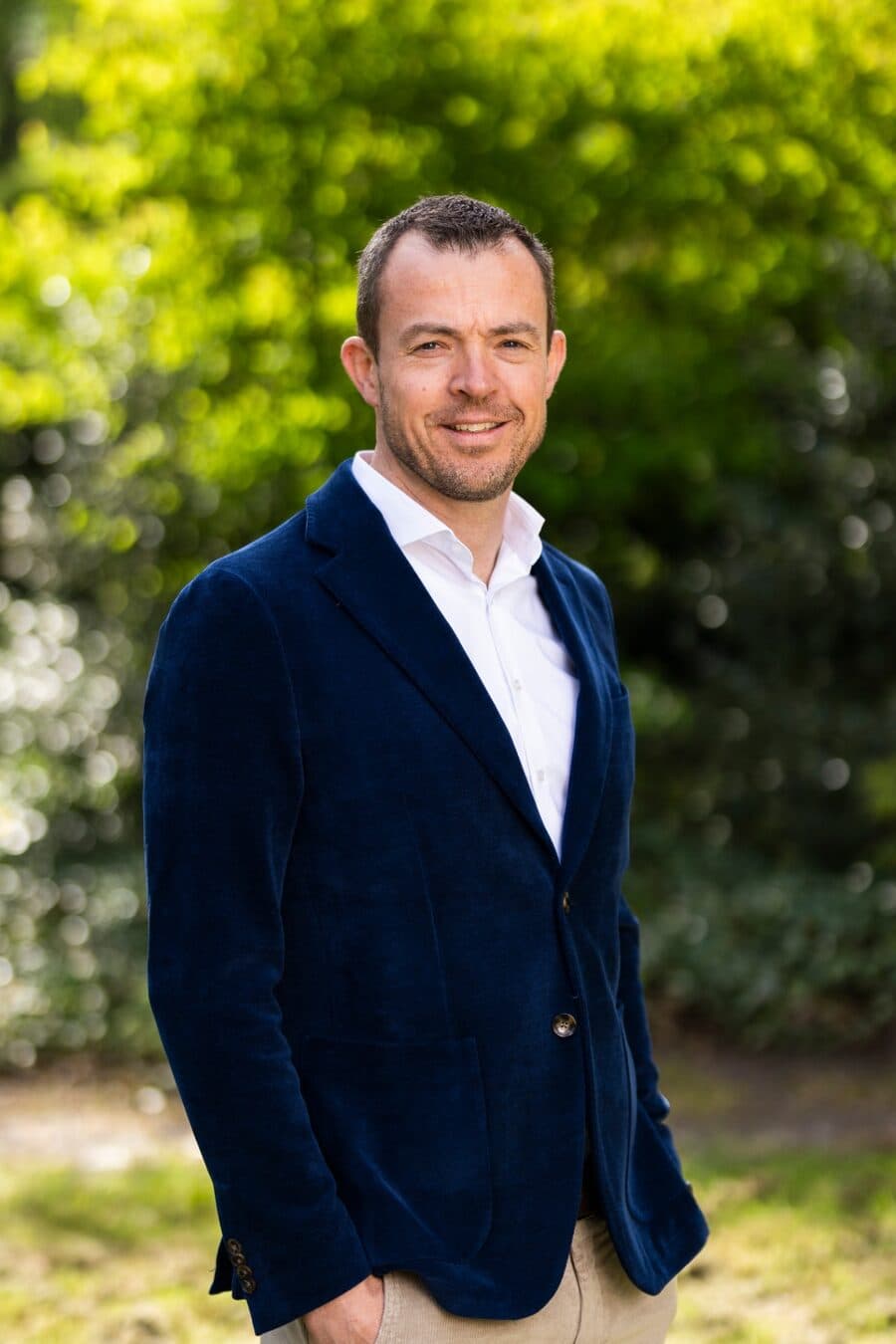
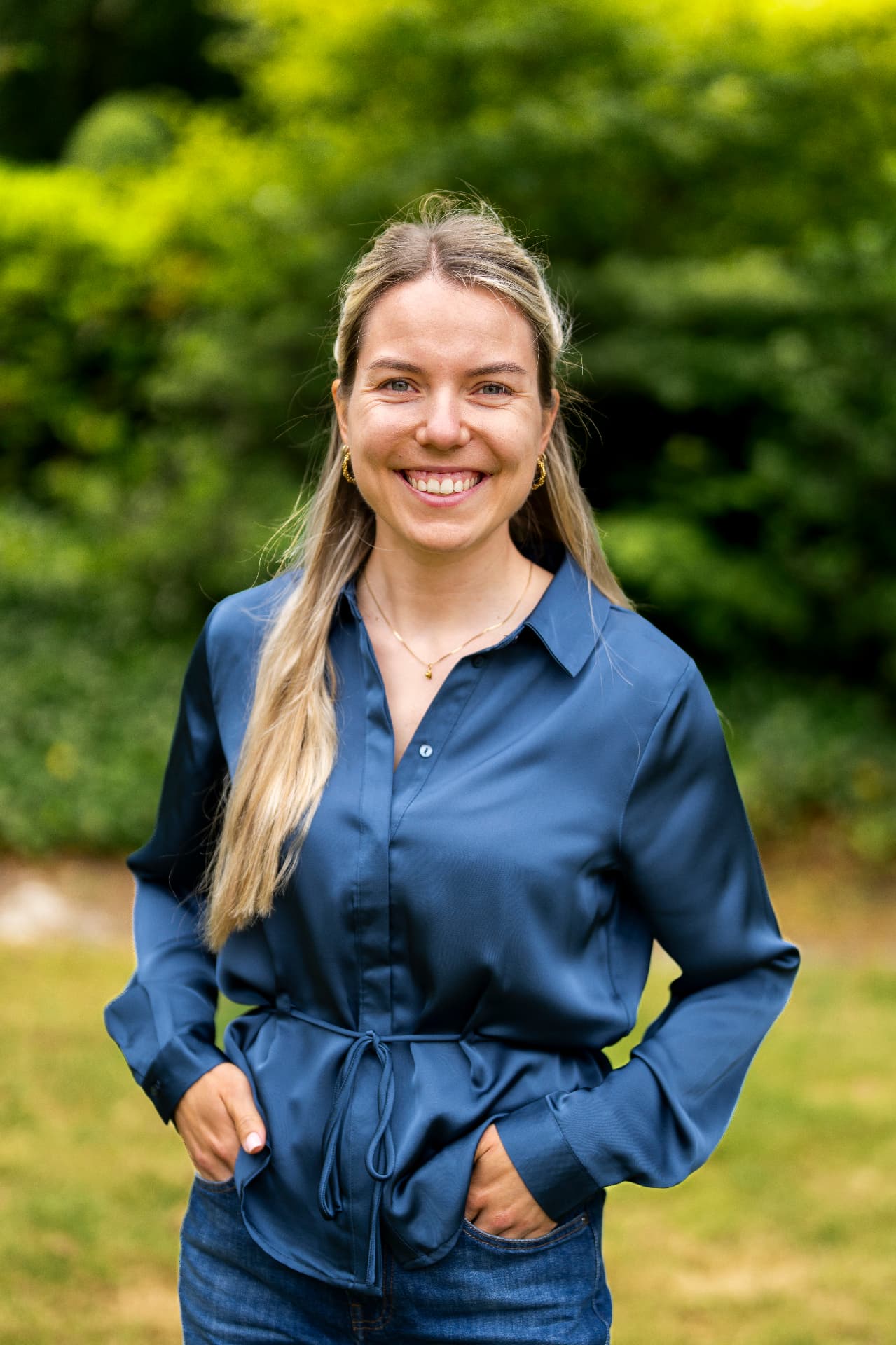
A whitepaper by Bas Schulten and Lara Koopman, Jester Strategy
The Monday on which, once again, there was no room
It is a familiar Monday in the boardroom of a mid-sized long-term care organisation. On the agenda was a conversation about the direction for the coming five years - what does demographic development mean for our capacity, how do we relate to the general practitioners in the region, which investments in technology are needed now to be able to deliver in three years' time? The conversation had been planned a month earlier, after careful diary management.
Monday, 8:45 a.m. A team leader reports that staffing on two nursing wards has become critical due to absence. A phone call from the healthcare inspectorate about an earlier report requires an explanation today. An alderman calls about the social-care tariffs coming to the council next week. The chair of the client council urgently wants to meet about an incident in one of the homes. Halfway through the morning, the strategy conversation is cancelled. "We will do it again next month."
This is not a story about poor diary management. It is a story about a sector so consumed by the day of tomorrow that the conversation about the day after structurally loses out. Not because executives do not consider the long term important, virtually all of them say the opposite. But because the structure of the work, the expectations of supervisors, and the regional interdependencies simply do not allow it. And that is precisely why scenario planning in long-term care is not a luxury or a trend, it is a board-level discipline. A routine that does not leave room for the long-term conversation to chance, but explicitly protects it.
The tyranny of the urgent
Executives in long-term care are, by the nature of their work, trained for speed. A fall incident demands an intervention today, not a report by Friday. A client not receiving the right care demands a direct line to the care manager. An enforcement question from the inspectorate demands a calm but timely response. Staff absence is an issue yesterday, a crisis today, a vacancy text tomorrow. Whoever steers this stream well runs the show well. Whoever does not steer this stream well loses their position within six months.
The problem is not that this is wrong. It is entirely justified that quality of care, safety of clients and compliance with laws and regulations take precedence over everything that plays out in the medium term. The problem is that all board attention is pulled towards it, and that after a day, a week, a month full of acute matters, nothing structurally remains for the conversation that is about years ahead. Three patterns are recognisable.
The first is that strategy conversations are structurally postponed. Not cancelled, postponed. "We will do it again next month." But next month brings new acute matters and the conversation shifts further. Anyone looking back at their diary sees that the strategic conversation has been postponed or shortened in most months. The time that was formally reserved has effectively been eaten up.
The second is that the strategic conversation itself changes character. When it does take place, the topics are often coloured by the day's events. A conversation that was meant to be about the organisation's position in seven years' time ends up as a discussion about how to solve this quarter's staff shortage. That is understandable, the shortage is real, but it means that the strategic agenda is overtaken by a tactical one. The question that did not come up does not come up.
The third is that fundamental shifts are only noticed once they are already acute. A development that will redefine the sector in seven years announces itself today in weak signals: a first article in a trade journal, a pilot project from a fellow institution, a statement by the minister. An executive structurally caught up with the day of tomorrow does not miss those signals out of incompetence, but out of lack of room. They notice the shift at the moment it is no longer a shift but a fact. And then it is too late to move on it, only to adjust.
An executive structurally caught up with the day of tomorrow does not miss signals about the day after out of incompetence, but out of lack of room.
What does not solve this is working harder, better diary management or more assistance. The tyranny of the urgent is structural; it cannot be escaped through individual effort. What does work is a mechanism that does not leave room for the long-term conversation to good intentions, but reserves an organised place for it. A form in which executives are obliged to step out of the issues of the day briefly. Not to escape them, but to return to them with sharper focus. Scenario planning is, in our experience, the most powerful form we know for this.
What the day after holds for long-term care
Before we go into what scenario planning offers executives, it is worth pausing for a moment on what is heading towards the long-term care sector in the medium term. Not as prediction, no one knows exactly how it will play out, but as a picture of the question to which executives must be able to give an answer.
The demographic blow is not a scenario but a given. The group of over-eighties in the Netherlands will almost double in the next fifteen years, while the potential working population is shrinking. The arithmetic impossibility of meeting demand for care in the current way is not a matter of strategy, that conclusion has already been drawn. What is a scenario question is how society responds. How does the balance between formal and informal care shift? How much is provided at home, how much in a clustered setting, how much in residential care? How does the expectation pattern of older people and their families change? What role does technology take, and which not, because care is also closeness? Different answers to those questions lead to different futures for a long-term care organisation.
The position of long-term care in the chain is shifting fundamentally. Through extramural care, through the rise of hospital care at home, through regional care agreements and the ongoing shift from treatment to living-with-care, long-term care is becoming a different player in the region than it was ten years ago. What a nursing home does today, may no longer be done by a nursing home in seven years. What district nursing organises today, may go partly through apps and remote monitoring systems. The boundaries between sectors such as long-term care, hospital care, mental healthcare and the social domain are becoming more porous. Executives who fail to relate to this shifting landscape find themselves on an island that keeps getting smaller.
The funding structure is in motion. Three funding frameworks (long-term care, health insurance, social support) are in practice becoming more and more intertwined, and the boundary between them is politically under constant pressure. Municipalities reviewing social-care tariffs. Health insurers tightening their procurement policy. National government considering further devolution or, conversely, re-centralisation. For a long-term care executive, today's funding mix is a mix whose foundations could lie substantially differently in five years' time. A budget built only on current tariffs and frameworks is vulnerable to system shocks.
None of these three developments can be predicted exactly. What we do know is that they will occur, that they will influence each other, and that they will be far-reaching. The question an executive must be able to answer is not "which of these scenarios will play out" - that question is unanswerable. The question is: do we have an organisation that holds up in each of the plausible scenarios, and that adds something in all scenarios to the region in which we are active?
What scenario planning is and is not
Scenario planning calls up for some the image of a thick report with four colourful future pictures, which disappears into a drawer after the presentation and is forgotten two years later. That image is not unjustified, it has often gone that way. But it says more about how scenario planning has sometimes been carried out than about what it can fundamentally be.
Good scenario planning is not a prediction exercise. No one knows what the care sector will look like in seven years' time, and anyone who pretends to know justifiably arouses distrust. Good scenario planning is also not a choice of scenario. An executive does not choose which future plays out, that choice is not theirs to make. What scenario planning does do is systematically imagine and explore fundamentally different futures in which the organisation could find itself, in order then to ask two questions that make the board's work concrete.
The first question is: which decisions must we take that are sensible in all plausible scenarios? Investing in technology that supports care at a distance, is that valuable in every scenario, or only in a specific one? Entering into a collaboration with general practitioners in our region, is that always valuable, or only if the funding structure shifts in a particular way? An investment in our training arm, is that a no-regret decision, or is it linked to assumptions about the labour market that do not hold in other scenarios? Decisions that are sensible in all scenarios may be taken today. Decisions that are sensible only in one scenario call for delay, not out of indecision but out of caution.
The second question is: which early signals tell us which scenario is unfolding? Scenario planning provides not only future pictures but also indicators. If the growth of hospital care at home crosses a certain threshold, we know one scenario is gaining force. If municipalities revise their social-care tariffs in a particular way, the other scenario is moving. By naming and following these indicators explicitly, the board gains an early-warning system. Not to spread panic, but to be able to reorient in plenty of time.
What scenario planning thereby does is the opposite of what is sometimes thought: it makes board work less uncertain, not more. By being explicit about which uncertainties exist, it becomes visible which decisions can be taken now and which must wait. By linking indicators to scenarios, it becomes visible which reality is announcing itself. What was once a vague unease about an unpredictable future becomes an organised conversation about what may happen and what we want to do about it.
Scenarios as a common language in the region
In long-term care, no organisation is an island. A nursing home depends on general practitioners and the hospital for inflow and outflow. District nursing depends on social neighbourhood teams and the informal-care infrastructure. The municipality sits at the table as funder of social-support care. The health insurer sits at the table as funder of health-insurance care. The care office sits at the table as executor of long-term care. Strategic decisions taken only from within one's own house get stuck in the region or never come about.
At the same time, the regional conversation is often difficult. Partners have different interests, different funding streams, different supervisory frameworks, different administrative rhythms. The regional table easily becomes a table at which everyone tries to push their own agenda. The strategic conversation about the future of the region often gets lost in tactical negotiation about this week.
Here scenario planning does something no other instrument can do as well: it offers a common language not tied to the direct interests of an individual partner. A set of scenarios for regional elderly care, developed jointly by long-term care organisations, hospitals, general practitioners, municipalities and health insurers, gives all parties something to talk about that is bigger than their own position. Not "how much will you pay us next year", but "what does our shared landscape look like in seven years' time and what do we need to do together now to be able to deliver in that landscape". That conversation has a fundamentally different tone.
The effect is double in practice. First, scenarios create a shared factual basis. Partners who disagree on direct tariffs and volumes can often agree on demographic development, on the move of care to the home front, on the trend in technology. That shared factual basis is often the missing foundation under regional collaboration. Second, scenarios create a shared long-term picture that can slow or accelerate the direct negotiations, depending on what is needed for the joint future. An investment that is costly for one partner but proves necessary in all scenarios takes on a different weight than an investment that only makes sense in the rosiest scenario.
For long-term care executives who feel that their region is not working as it should, a joint scenario exploration is one of the few interventions that can really shift the conversation. Not because it massages away the conflicts of interest, those remain, but because it lays a layer on top of them that is bigger than the parties together.
Three design choices for the executive who wants to make room
For anyone with the familiar feeling that the scenario conversation in their own house and in the region is being held too little, three design choices are, in our experience, decisive in whether it actually happens.
The first is that scenario planning gets a fixed moment in the board's rhythm, not an event, but routine. Not one big scenario process every five years, but for instance twice a year a half day on which the board, possibly together with the supervisory board, looks back at the scenarios formulated earlier, assesses which indicators have moved, and updates the scenarios. This meeting is not up for debate, not for an acute problem, not for an enforcement question, not for a tariff negotiation. The protection of the moment is precisely the mechanism against the tyranny of the urgent.
The second is that the scenarios do not remain an external product, but land in the organisation's own steering rhythm. A report from an external facilitator that disappears into a drawer does nothing. What does work is for the scenarios to form the basis for a standing paragraph in the annual plans ("how has our position changed within the plausible scenarios?"), for a standing question on investment proposals ("does this investment hold up in all scenarios or only in the most favourable?"), and for the procurement conversation with health insurer and municipality ("what do we both see as plausible futures, and how does this contract fit?"). The scenarios only live if they are used in the steering cycle.
The third is that the regional dimension is given an explicit place, not an implicit one. An in-house scenario process is valuable, but a regional scenario process is more powerful. It calls for initiative, usually from a few executives who dare to propose doing this together, and it calls for patience, because partners initially distrust every new form of collaboration. But what it delivers is a foundation for regional collaboration that no other topic of conversation offers. Anyone who waits for the health insurer or the municipality to take the initiative usually waits a long time. The party that takes the initiative often wins the narrative, and that too is worth something.
Three questions for the board table and the supervisory board
For anyone wanting to test whether the scenario conversation gets the place it deserves in their own organisation, there are three questions that quickly make the conversation concrete.
One: how much board time have we spent in the past six months on issues that will be relevant in five to ten years, and how much on issues that will have played out within three months? The answer is usually painful. It is not a reproach to the executive, but a diagnosis of the structure in which they work. That the structure pushes towards the urgent is understandable; that the executive does not put a mechanism in place against it is a choice.
Two: do we have, as a board and supervisory board, a shared picture of the two or three fundamental developments that could change our organisation most strongly in the coming seven years, and do we know which early signals we are following to see which scenario is announcing itself? If that shared picture is not there, there is no compass against which current decisions can be weighed. Every decision then becomes ad hoc, even when it has fundamental consequences.
Three: have we, in the past two years, had a conversation in the region that was structurally about the joint future, and not about next year's tariffs? Or have all regional conversations in practice been about volume and money? Anyone who has to give the latter answer misses the opportunity that joint scenario planning offers.
The long-term care sector deserves executives who recognise the tyranny of the urgent and at the same time refuse to be lived by it. That is no plea for less attention to the day of tomorrow, that attention is entirely justified. It is a plea for protecting a second rhythm: a rhythm in which the day after is taken seriously, in their own house and in the region. Scenario planning is no panacea for that, but it is the most powerful instrument we know. Not because it predicts the future, but because it organises the conversation about the future. And in a sector in which that conversation disappears without protection, that is the difference between organisations that move with what comes and organisations that are overtaken by it.
About the authors
Bas Schulten is a partner and senior strategist at Jester Strategy. He guides executives and boards in long-term (elderly) care and the public domain on strategy formation, scenario planning and regional collaboration.
Lara Koopman is a strategist at Jester Strategy specialised in strategy and scenario planning within long-term (elderly) care. She works extensively for care organisations that want to anchor their long-term strategy in their board rhythm.
This whitepaper has been written on the basis of practical experience with scenario planning trajectories at Dutch long-term care organisations and in regional care collaboration. The insights presented are observations of the authors and reflect the wider practice of Jester Strategy in this sector.